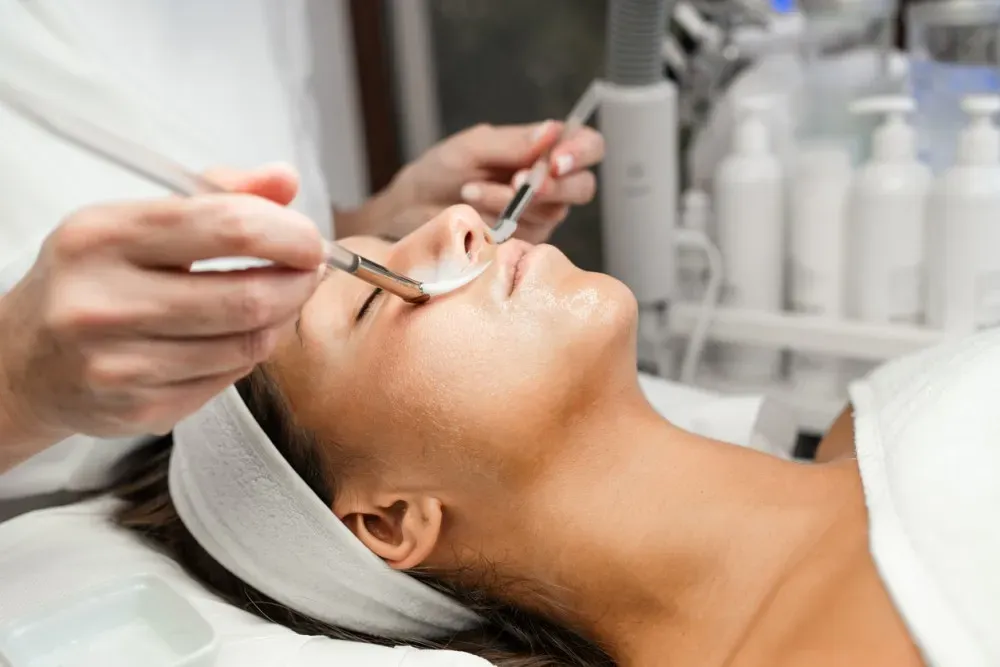
Winter is often thought of as the season for dry, dull skin, but it can also be an ideal time to consider professional chemical peels.
Chemical peels can help improve a variety of concerns, including acne, clogged pores, uneven skin tone, hyperpigmentation, dullness, and signs of sun damage. However, not every peel is appropriate for every patient. The type, strength, and frequency of treatment should be selected based on the patient's skin type, concerns, medical history, and treatment goals.
At Azar Dermatology, we offer customized chemical peel treatments designed to address individual skin concerns while prioritizing skin health and safety.
Here’s what you should know about chemical peels and why winter may be a great time to consider one.
What Is a Chemical Peel?
A chemical peel is a professional treatment that uses a chemical solution to exfoliate the skin at a controlled depth. Depending on the type of peel, it can remove damaged surface skin cells and encourage the development of smoother, more even-looking skin.
Chemical peels may be used to address:
- Acne and clogged pores
- Post-inflammatory hyperpigmentation
- Uneven skin tone
- Sun damage
- Dull or rough texture
- Fine lines
- Certain types of pigmentation
- Melasma in appropriately selected patients
The depth and intensity of a peel can vary significantly, which is why choosing the right treatment for your skin is important.
Why Consider a Chemical Peel During the Winter?
Winter can be a convenient time for certain chemical peel treatments because patients may have less intense sun exposure and fewer outdoor activities than they typically do during the summer.
However, winter does not eliminate the need for sun protection. UV exposure continues year-round, and protecting newly treated skin from the sun is an important part of the healing process.
Winter may also provide an opportunity to plan treatments around vacations, weddings, events, or other occasions later in the year. Depending on the peel, multiple treatments may be recommended to achieve the desired results.
Glycolic Acid Peels
Glycolic acid is an alpha-hydroxy acid (AHA) that works primarily at the skin's surface to exfoliate dead skin cells.
Glycolic acid peels may be a good option for patients looking to improve:
- Dullness
- Uneven texture
- Mild discoloration
- Sun-related pigmentation
- Fine lines
- Overall skin radiance
Because glycolic acid is an exfoliating ingredient, the strength and application of the peel should be customized to the patient's skin and treatment goals.
A series of superficial peels may be recommended rather than expecting one treatment to completely transform the skin.
Salicylic Acid Peels
Salicylic acid is a beta-hydroxy acid (BHA) that is oil-soluble, making it particularly useful for patients with oily or acne-prone skin.
Salicylic acid peels may be considered for patients experiencing:
- Acne
- Clogged pores
- Excess oil
- Blackheads and whiteheads
- Rough or uneven texture
- Post-inflammatory discoloration associated with acne
For patients whose primary concern is acne and congestion, a salicylic acid-based peel may be incorporated into a broader acne treatment plan.
What Is the Perfect Derma Peel?
The Perfect Derma Peel is a medical-grade, medium-depth chemical peel containing a combination of ingredients including TCA, salicylic acid, retinoic acid, kojic acid, phenol, glutathione, and vitamin C.
Because it combines multiple active ingredients, it can be used to address several concerns at once, including pigmentation, acne, uneven skin tone, and signs of skin aging.
The Perfect Derma Peel is different from a simple glycolic or salicylic acid peel and typically involves more noticeable peeling and downtime. The manufacturer describes the most intense peeling as commonly occurring around days three through five, although individual experiences can vary.
Who Is a Candidate for a Chemical Peel?
The right candidate depends on the type of peel being considered.
In general, chemical peels may be appropriate for patients who are looking to improve concerns such as:
- Acne or clogged pores
- Uneven skin tone
- Hyperpigmentation
- Dullness
- Rough texture
- Mild signs of photoaging
- Certain types of discoloration
A consultation is important because the same peel is not necessarily appropriate for every patient.
Your provider will consider factors such as your skin type, pigmentation history, current skincare routine, medications, previous procedures, and how your skin has responded to treatments in the past.
Patients with darker skin tones can also receive chemical peels, but treatment should be carefully selected and performed by a provider experienced in treating a range of skin tones because some patients have a higher risk of developing post-inflammatory hyperpigmentation or other pigment changes.
Who Should Avoid or Postpone a Chemical Peel?
Chemical peels are not appropriate for everyone, and sometimes the best decision is to postpone treatment until the skin is healthier.
A peel may need to be avoided or delayed in patients with:
- Active infection or open wounds
- Sunburn
- Significant skin irritation
- Active dermatitis or eczema in the treatment area
- Certain active cold sore outbreaks
- Recent waxing or other procedures that have irritated the skin
- Certain medications or medical conditions
- Recent isotretinoin use, depending on the peel and provider's protocol
- Pregnancy or breastfeeding for certain peel formulations
The specific contraindications vary depending on the type and strength of the peel. For example, The Perfect Derma Peel's manufacturer lists pregnancy and breastfeeding, recent isotretinoin use, active skin irritation, open wounds, recent certain procedures, and several other conditions as reasons to avoid treatment.
This is why a consultation and complete medical history are important before treatment.
What Should You Expect After a Chemical Peel?
Downtime depends on the type and depth of the peel.
After a lighter peel, patients may experience:
- Mild redness
- Tightness
- Dryness
- Flaking or scaling
- Mild sensitivity
Some patients have little visible peeling, while others experience more noticeable exfoliation.
More intensive peels can result in more significant redness, peeling, swelling, or downtime. With a medium-depth peel such as the Perfect Derma Peel, peeling is typically more noticeable and may continue for several days.
It is important not to pick or manually remove peeling skin. Allowing the skin to shed naturally can help minimize irritation and complications.
What Should You Do After a Chemical Peel?
Post-peel care is just as important as the treatment itself.
Patients are generally advised to:
- Follow their provider's specific post-treatment instructions
- Use gentle cleansers
- Keep the skin moisturized
- Avoid picking or peeling the skin
- Avoid unnecessary exfoliation while the skin is healing
- Avoid introducing new active ingredients too quickly
- Protect the skin from UV exposure with sunscreen
- Avoid excessive heat and other activities that may irritate freshly treated skin, depending on the peel
Your provider may temporarily adjust your usual skincare routine while the skin recovers.
Can Chemical Peels Treat Melasma?
Chemical peels can be part of a treatment plan for certain pigmentation concerns, including melasma, but they are not appropriate for every patient with melasma.
Melasma-prone skin can be particularly sensitive to inflammation, and overly aggressive treatment may worsen pigmentation. For this reason, the type of peel, strength, frequency, and preparation should be carefully selected.
For some patients, a combination of topical medications, pigment-regulating skincare, sun protection, and carefully selected procedures may provide better long-term management than relying on peels alone.
How Often Should You Get a Chemical Peel?
There is no one schedule that works for everyone.
Some superficial peels may be performed as a series, while more intensive treatments require longer intervals between procedures. Your provider can determine the appropriate frequency based on the specific peel, your skin's response, and your treatment goals.
More treatments are not necessarily better. Giving the skin enough time to recover is an important part of achieving consistent results.
Is Winter the Best Time for a Chemical Peel?
Winter can be a convenient time for many patients to undergo a chemical peel, particularly if they are looking to address pigmentation, acne, dullness, or texture before spring and summer events.
However, the season is only one consideration. Your skin's current condition, sun exposure, skincare routine, medications, and individual risk factors all play a role in determining whether a peel is appropriate.
The goal is not simply to create more peeling. The goal is to choose the right treatment for your skin and allow it to heal properly.
The Bottom Line
Chemical peels can be an effective way to refresh the skin and address concerns such as acne, pigmentation, uneven texture, and dullness. Glycolic acid, salicylic acid, and combination peels such as The Perfect Derma Peel each have different properties and may be appropriate for different patients.
Winter can be a convenient time to undergo these treatments, but chemical peels should always be customized to the individual. Proper patient selection, appropriate treatment intensity, and diligent post-treatment care are essential for achieving results while minimizing the risk of irritation and pigment changes.
At Azar Dermatology, Dr. Angela Azar and her team evaluate each patient's skin and goals to determine which treatment is most appropriate.
If you're considering a chemical peel this winter, a consultation can help determine whether you're a candidate and which type of peel may be appropriate for your skin.